Saturday, September 5, 2015

Grub Street Printing Newsletter #77, September 2015


A couple of the newsletters I got last month reminded me that book ornamentation need not be confined to ornate covers or a profusion of graphics sprinkled through the text. While such design elements are generally ignored in the minimalist design of ebooks, traditionally the book bindery could decorate a book far in excess of the capabilities of the press. The newsletters each specifically referenced gilt edging, a feature that can still be found on books manufactured in the 21st century. Stamping gold leaf on the trimmed edges of a book is not only ornamental, the gilt edging also resists dirt and dust and somewhat seals the paper edges from moist air which can begin the phenomenon of foxing, or discoloring of the pages.

Most of us are probably most familiar with gilt edging on Bibles or other religious books but the good people at Abe Books point out that gilt edged books were common in literary tomes which frequently also sported foil stamped covers with ellaborate design elements.
Edge gilding is not a complicated process. The unbound book is clamped to align the page edges to form a flat, solid surface, then a sheet of gold leaf is laid over the edge of the book and pressure is applied to the leaf. While many hand binderies gilt edge books manually, this video uses a machine to apply even pressure to the leaf.
I think edge gilding is about the only bindery option for the trimmed book edge today, but there were numerous options in the past both ornamental and practical.

Years ago many books, even cheap pulps, had the trim edges stained or perhaps speckled. Staining was presumably an inexpensive way to protect the trim edges from dirt and dust while speckling was purely ornamental.
Fore edge painting is a forgotten art today, a unique decoration so time intensive it can hardly be found in anything but special edition volumes. Fore edge painting is accomplished by fanning the edge of the book and clamping it to again provide a smooth, hard surface. A watercolor artist then paints the trimmed book edge with a painting that may or may not be relevant to the book's subject matter. After drying, the book is released from the clamp. While the painting appears as nothing more than bits of color on the edge of the closed book, the reader who fans the pages will reveal the artist's work. It's even possible for a book to have double fore edge painting when fanning the pages one way with another painting revealed when the pages are fanned the other way.
Another time intensive effect, but one that is more practical than decorative, is indexing the edge of books. Bibles and cookbooks were most frequently notched or step indexed. The process is hand work done in the bindery. The operator physically opens the book to the proper page (identified by a press mark denoting the page and position) and rolls the pages back. The book is positioned, a switch or lever is activated to put the familiar half moon cut into the beveled pages and the operator moves on to the next notch. Often a protective tab was positioned on the correct page beneath the notch before the operator opened to the next page.


Some years ago I purchased a 1940 edition of The American Woman's Cook Book, a rather run-of-the-mill cookbook that has green stained (to match the cover cloth) thumb notch indexing in three banks of nine thumb notches each along with printed identifying tabs for every notch (Breads, Salads, etc.). The book reminds me that production costs occasionally must give way to function (and occasionally to art), perhaps even more so in the age of the ebook, when the very form of the book itself should be celebrated.
The September newsletter follows.
RR Donnelly Re-Invents Itself...Again
RR Donnelly,, has announced that it is splitting into three companies: Financial Co. (to offer one stop shopping for corporate financial services), Publishing and Retail-Centric Print Services (printing and business supplies), and Customized Multichannel Communications Management Company (offering everything from direct mail to web site hosting). The latter, aka CMCo, will inherit RRD's $3 billion debt and $677 million of underfunded pensions.

Saving Lives One Book at a Time
The beauty of books and the book form is amazing. These inexpensive books help provide safe drinking water to populations that don't have access to clean water.
Eco Paper Mill
Domtar, a leading supplier of book printing papers, has announced that it now produces 74% of the power used in its manufacturing process.
Book Zones
Over 300 years ago, Grub Street was a London district devoted to books. Korea expanded the idea to Paju Bookcity where the focus includes large doses of the technology that produces books. And Tokyo has Jimbocho, shoe-horning a book-centric district into one of the densest cities in the world.
Adult Coloring Books? There's an App for That
Can You Design a Cover in 2 Weeks?
To mark the twentieth anniversary of the publication of David Foster Wallace title Infinite Jest, its publisher, Little Brown and Company, has offered $1,000 for the cover design chosen for this edition. Hurry, deadline is September 15th.
Authors United Requests DOJ Probe of Amazon
Authors United (AU) has doubled down in its brawl with Amazon requesting a Department of Justice investigation of Amazon's monopoly of the book industry, specifically ebooks.
Amazon Employees Got Them Workplace Blues
A New York Times article describing a cut-throat white collar culture at Amazon created enough furor for CEO Jeff Bezos to ask unfairly treated employees to contact him directly.
Politician Accepts Kickbacks From Printer
George Gallo, former GOP chairman in Connecticut, has been ordered to pay $117,000 restitution for accepting $117,000 in kickbacks from a Florida printer, as well as being sentenced to 13 months in prison.
Japanese Bookstore Out-monopolizes Amazon
Kinokuniya, Japan's largest book selling chain, has purchased 90% of the first printing of popular author Haruki Murakami's new title to stall Amazon's order fulfillment of the title.
Are Digital Classrooms Better?

Converting traditional classrooms to digital is costing $10 billion per year but it may be time to analyze the educational benefits for the students.
Final Thought
If you only read the books that everyone else is reading, you can only think what everyone else is thinking.”
Haruki Murakami


Tuesday, August 11, 2015

Grub Street Printing Newsletter #76, August 2015

Amazon Sued Again
Authors United (AU) and the American Booksellers Association (ABA) have partnered in a lawsuit charging Amazon with monopolizing book sales. Did the authors and book sellers just now realize that selling Kindles and ebooks at a loss just might have been the key to monopolizing the ebook market?
Audio Editions Continue Growth

Forget eBooks. Revenues for 2014 showed audio books climbed 13.5% over the previous year while eBook revenues rose just 3.8%.
Facebook Wants In
Now that various Facebook pages have sold millions of books, Facebook wants a cut of the action and is working on providing book specific retailing pages.
Publishing Thresholds
That this is causing such a stir up north surprises me. A successful American publisher told me 15 years ago that he didn't want to develop books that couldn't support a 25,000 copy first printing.
Print Gremlins Still Run Loose
The digital revolution in book production seems not to have been successful in eradicating the fiendish print gremlins. The UK edition of Harper Lee's new title shipped with text missing from six pages. Eye-witness accounts of the gremlins have yielded these renderings.
Following Literary Footsteps
Is there a book in your past that left you with new insights about America seen with fresh eyes? Follow the paths of Jack Kerouac, John Steinbeck and ten other novelists (whose stories were published from 1872 to 2012) with routes from this map of their literary travels.
NYC Library Confronts Illiteracy
For a variety of reasons the availability of ebooks hasn't affected illiteracy rates for the poor, a problem the NYC library is addressing.
Sorry, This Just Sounds Stupid
New Zealand start-up Booktrack has just secured another $5 million in funding. It sells apps that play music while you read your ebook, presumably for folks that worry their iPod doesn't have just the right tunes for serious reading.
Roald Dahl Apps Available

When my children were young they found Roald Dahl stories strange, funny and sometimes frightening. If you have Roald Dahl fans in your family, Penguin's new apps feature Dahl's characters the Twits (e.g. Don't Wake Up Mrs. Twit!) and are available for both Android and Apple devices.
Social Media for Writers
The premise behind this infographic seems disheartening to me, but for the self-promoters among us there may be some worthwhile tips.
B&N's Nook Circling the Drain?

B&N's new CEO, Ron Boire, may feel some pressure to kill the unpopular Nook ereader, despite the fact that B&N stockholders believe in it. B&N has spent over $1 billion developing the Nook and an updated version will be introduced in early fall, just as Boire assumes control.
The Problems (and Joys) of Moving
As my son begins moving into his first house, I'm reminded of one of the sweatiest, yet most enjoyable aspects of a move.
eBooks Allow Better Editing
Can ebooks rushed to print allow authors to edit more carefully before committing to print?
Final Thought
For a moment I was distracted. Books always did that to me... I liked the creamy pages, the smell of ink, all the secrets locked inside.” Elizabeth C. Bunce
*********************************************************Archived Newsletters are available at http://grubstreetnews.blogspot.com/

Grub Street Printing Newsletter #75, July 2015

The New Kindle Royalty System
Beginning this month, self published Kindle ebook authors will be paid not for the “sale” of their ebook, but for the total number of pages readers have actually read of their title. Apparently books sold by regular ebook publishers will retain the traditional payment based on sales system.
Top Cities for Books (even eBooks!)

Using Amazon data, a list of the top five book buying cities in America showed that Washington DC bought the most ink and paper books while Seattle the most books (conventional and eBook). The data was for cities of 500,000 people or more.
Amazon Most Trusted Retailer
Amazon founder Jeff Bezos has always focused on keeping the customer satisfied. Apparently he's doing a good job as Amazon tops the list of reputable retailers for the third consecutive year.
Another Survey Favors Ink and Paper
After working in the book industry for so long I often wonder if my prejudice blinds me to the world of pixels, but survey after survey reports people comprehend information better and are more relaxed reading ink on paper material.
Kickstarter Funds Bath Books
Bibliobath raised over $10,000 to refine and market their bath-time friendly books made with waterproof (no trees) paper, ink and binding, filling a need I wasn't even aware of.
Greenpeace Re-engages

The Asia Pulp and Paper Group has announced that Greenpeace will resume its role of enabling APP to enact and maintain its Forest Conservation Policy. APP operates in Indonesia and China and produces over 19 million tons of paper annually.
Independent vs Publisher Issued in $ and ¢
The playing field has changed quickly in the last decade and many of the truisms I believed in no longer apply when deciding to go through a publisher or producing your title independently.
Inkjet Book Production
Apparently this decade old technology may be about to take off. Book manufacturers believe digital inkjet economies have the potential to replace toner based POD book production.
Blockbuster Dies While Indies Thrive
Debunking the logic that reasons printed media outlets (ie. Bookstores) will go the way of the video media rental outlets (ie. Blockbuster), the current trend is a resurgence in book sales and new book sellers.
More On Adult Coloring Books
As reported in May's newsletter, coloring books for grown-ups are taking off. Now Marvel is releasing three coloring books featuring their super heroes, such as Captain America and Iron Man squaring off on opposite sides of the Civil War. Try to stay inside the lines, okay?
No Blues for the Greys
The new Grey title, which tells Christian's (of Fifty Shades fame) side of events, followed the success of the trilogy by selling 1.1 million copies out of the gate and has locked in plans for its third, fourth and fifth printings.
What Millenials Buy
A 2015 survey taken in the UK shows millenials the least likely generation to read eBooks. For the general population, dedicated eReaders are owned by just 41% of the population, but considering all devices on which an eBook can be read, 83% of those surveyed had a smartphone and 71% owned a tablet.
Final Thought
Please, no matter how we advance technologically, please don't abandon the book. There is nothing in our material world more beautiful than the book." Patti Smith
************************************************
Archived Newsletters are at http://grubstreetnews.blogspot.com/

Wednesday, June 17, 2015

Grub Street printing Newsletter #74, June 2015

After a year or two in the book making business I ran into a page of copy I'd never seen before. It was entitled Colophon. My mentor, and friend, Patrick explained that a colophon was just a way to communicate significant information about the book including, but not limited to, the typeface, the name of the designer, the typesetter, the date of publication, the stock that was used for the text and cover, the printer, the binder and even the run length.
Often the Acknowledgment page in the front matter carries the burden of identifying and acknowledging the assistance of others that contributed to the book's creation. But about the time the husband and children are being appreciated for their patience, I think something more formal might be more appropriate at times.
Perhaps adding a colophon to most trade paper titles may seem a bit much. The first book I printed with a colophon was a museum catalog for an upcoming show of the WPA Artists at the University of Michigan Art Museum. It was a well designed, classy job cover to cover. And right there, at the end of the book, with all the designers, editors, and paper stocks was our company name.
Do you think everyone in the plant paid special attention to that title as its production moved through their departments?
Deciding what titles would benefit from the addition of a colophon is difficult. Generally I think literature and art books would be the most common but non-fiction books that meet exceptional levels of content, manufacture and materials could acknowledge an array of editorial and structural providers.
I collect a lot of books and admit even most of the dustier ones lack a colophon, and the newer ones don't reveal much except they were done in Asia.
It's too bad.
Generally when printing offset books the page count involves adding a blank page or two in the back meaning page count and price wouldn't be affected by adding a colophon page.
Let''s be honest. You know all the time spent designing your book, selecting text stocks, involving a trusted printer, etc. sets your book apart from others in the field.
Perhaps the addition of a colophon would not only acknowledge the craftsmanship involved in it's production, but also inform the reader how the successful design was rendered.


Selling What You Don't Own
Exactly what constitutes the purchase of an ebook remains in question, at least overseas. Dutch courts ruled that consumers can sell “software rights” and so Dutch bookseller Tom Kabinet offers second hand ebooks, upsetting the major Dutch publishers who have responded with a flurry of lawsuits.

Scrabble Pros take Note
As word and word usage evolves, it gets harder and harder to keep up with. The final arbiter on all Scrabble game words has just accepted around 6,500 new words. That's over 10% of a college graduates entire vocabulary.
Independent Bookstores on the Rise
It's heartening that the number of independent American bookstores is up 27% in the past five years. All better? Well, tiny little France supports more independents than the entire U.S.
Amazon Controls Your Books
When Audible (owned by Amazon) upgraded his app for listening to his books on his iPhone, this writer realized that by “buying” all his books from Amazon, he not only didn't own his books, he couldn't even control how he used them. Their football, their rules I guess.
Amazon and Audible Dictate Terms
Amazon has been unable to finalize a contract with the last of the big 5 publishers, Penguin Random House. Will it use the same “freeze out” it used against Hachette last year to force Penguin's hand? Meanwhile, its subsidiary Audible is attempting to force German publishers to accept a new contract by threatening to stop offering their audio titles on Amazon.
# is Popular
Oxford University Press reviewed 500 words to find the most frequently used new word by children/youth authors. That would be hashtag.
Thriving Bookstores...in Asia
For whatever reason, this is the second article I've posted about bookstores open past midnight and packed with customers all the while. This store is in Tokyo, the former mention was a store in Taiwan. I can't speak to the cultural differences, but I approve...and am a little jealous.

The Future of Scholarly/Academic Publishing
The world of scholarly journals has totally changed since I worked on Scripta Technica titles thirty five years ago. Paper and ink is on the decline, and large publishers like Elsevier, Taylor and Francis, and Wiley and Sons have come to dominate the field. Can the authors and researchers regain control? Is open access the solution?
The Changing Paper Market
Some domestic paper mills are booming, just not the ones that make the paper for your books. Just as the American paper manufactures have adapted to cleaner, more efficient technologies, the third world manufacturers have built brand new highly efficient, automated mills. Unfortunately, serial deforestation and poached rain forest pulp is all too common no matter how modern the factory.
DRM, the UK and eBooks
British publishers have successfully prosecuted foreign online booksellers (including Virgin Media and Sky) for copyright violations of eBooks or eBook content. The sites purportedly have over 10 million eBook titles available on their web sites.
Final Thoughts
It wasn't until I started reading and found books they wouldn't let us read in school that I discovered you could be insane and happy and have a good life without being like everybody else. ― John Waters


Monday, May 11, 2015

Grub Street Printing Newsletter #73, May 2015


The loss of the typesetting industry happened without much notice. A lot of publishers, especially those entering the field post-Y2K, probably think typesetters were just glorified typists anyway. The welcome embrace of desk top publishing twenty years ago let authors and publishers do all the prep work themselves. The loss of the typesetting industry happened without much notice. A lot of publishers, especially those entering the field post-Y2K, probably think typesetters were just glorified typists anyway. The welcome embrace of desk top publishing twenty years ago let authors and publishers do all the prep work themselves.

“And this is the purpose of typography: The arrangement of design elements within a given structure should allow the reader to easily focus on the message, without slowing down the speed of his reading.”      Hermann Zapf

But a primary function of book typography was designing the book…the entire book. Cover design comes to mind but that was generally handed over to a staff graphic designer. The nuts and bolts of good design involved typeface and font size. Aside from aesthetics, which is reason enough, good design has a number of unexpected benefits, whether it’s for a printed book or an ereader.
The typeface for the text needed to be chosen and then a size in “points” specified. The space between the lines of type was “leading” and that needed to be appropriately considered.  If the designer called for Garamond 8/6 it meant that the font would be 8 point and the leading would be 6 point. Kerning, the space between the letters, could be adjusted.
 Chapter openings presented a wide array of options. Would the chapter title be in the same typeface or would a different face be better? How low should the title drop and then how low will the text drop beneath the title? Would all chapters open recto, meaning some verso pages would be blank?
Where would the folios go? Head or foot, left, right or centered? Again, would another typeface enhance the folios and what size would it be?
Would running head or feet enable the reader to browse the book? More typeface questions. And what about margins? Classic design would say push the text up toward the head and in toward the spine, but how much? Today’s default is center the text on the page. Would that look better?
I published a book some time ago and I can honestly say I considered almost none of these things…and compared to professionally designed books, you can tell.
Type is such a basic and integral part of book production that I’m trying to at least
understand the who, what, where, when and how of type design and usage.
The history begins with early cave paintings, then Egyptian hieroglyphics that morphed from representational art to standardized characters in the shape of objects, then to forms that abstractly defined objects and finally to shapes that described a sound rather than an object. 

The difference in the terms typeface and font is subtle. In the 15th century, metal type was sorted and stored in a box called a font. You might have Times Roman in one box, Times Roman bold in another, and Times Roman light in yet another. Each box contained a different font, but taken all together, they are fonts in the Times Roman typeface.  Stacking all the Times Roman boxes together would describe a font family, the design that identifies them as Times Roman is the typeface.
 During the modern era of typography and printing, the terms uppercase and lowercase evolved because capital letters were stored in a type case usually stored above a case of small letters. The cases were physically different to take advantage of the size difference between the two. Prior to letterpress typesetting, uppercase letters were termed “majuscule” while lower case were “minuscule”.
Unfortunately, today typeface selection has devolved to the point that there are basically just two faces that are used in the majority of printed matter. Out of many thousand fonts, we use Times (serif) and Arial (sans serif). That’s it.
The ability to more easily design modern typefaces has led to an explosion of creative type design. It’s not uncommon for a publication or business to have a unique typeface created for their use.
Did you know that all of the Inter State road signs in America use the same typeface, one that was specifically designed for that purpose? It’s called Clearview Hwy. The story of how the specifications were written and how the designers developed it describes an unusual situation of creating a face for one and only one usage.

“In a badly designed book, the letters mill and stand like starving horses in a field. In a book designed by rote, they sit like stale bread and mutton on the page. In a well-made book, where designer, compositor and printer have all done their jobs, no matter how many thousands of lines and pages, the letters are alive. They dance in their seats. Sometimes they rise and dance in the margins and aisles.”
Robert Bringhurst, The Elements of Typographic Style

Just for the heck of it, try using a different typeface than Times or Arial, but please, not Comic Sans, a face that’s universally reviled on the typography web sites.
This month’s newsletter is set in Book Antiqua.

Apple Evades Oversight
In its bid to be the final arbiter of all things digital, Apple has been uncooperative with those charged with measuring Apple's compliance with court ordered anti-trust monitoring. Shocker!

Scribd Takes on Audio Subscriptions
Last November Scribd jumped into subscription audio books with 30,000 titles that could be streamed or downloaded for $8.99 per month, which also included full ebook access. Penguin Random House just added 9,000 of their titles to Scribd's list including Game of Thrones and Fifty Shades of Grey, making 45,000 titles available, way more than Kindle Unlimited's offerings.

UK Indy Bookstores Disappear like Pubs


Children's Print Book Sales Climb
Another market that remains vibrant in traditional book sales is the children's market which continues to show spirited growth in numerous countries.

Improbable Libraries
Like baseball, banjos and saxophones, America claims credit for the first lending libraries. The role of libraries continues to be stretched and redefined by offering the world's knowledge to everyone.

Coloring Books Take Off (Whaaaat?)
Amazon's best selling book is a coloring book ...for grown-ups. I'm not sure I understand this craze but I'm glad that folks are buying paper and ink books.

Canada's Clueless Bus Driver
This is either the nanny society on steroids, a school bus driver who's a control freak, or a very illiterate driver who can't comprehend why someone would sit quietly on a school bus and read. Canadian authorities are too polite to say which it is.

Kobo Uses Value to Fight Kindle
Kobo designed their new Glo reader by listening to die-hard book lovers. It reads more like a book, outperforms the base Kindle and costs $70 less.
January Book Sales Up, Except for eBooks
While trade book sales climbed over year ago numbers, ebook sales declined 10% in January.
 
Banana, Milk, Sugar, Kobo and Cheerios
While there's no toy in the box, 8.4 million Cheerios consumers will get free access to nine different ebooks via BookShout.

Kindle Does Marketing eBooks
I have no idea why Kindle publishing an ebook featuring Land Rovers is worthy of breathless headlines. Didn't any millennials work in the industry before Kindles? What's next? They're already awash in CEO autobiographies.

Kindle Unlimited Payments Shrink Again
While Kindle Unlimited's customer base grew again, payouts to publishers/authors have continued to shrink.

UK Publishers Prosper. Authors? Not So Much.
While UK austerity moves are more rhetoric than policy at this point, UK publishers continue to throttle authors' paychecks despite the fact that they're earning a tidy sum, thank you.
Wall Street Notices B&N
While many were busy writing Barnes & Noble's obituary, things there improved while we weren't watching. In the past two years it paid off its debt, tightened up financial controls and brought Samsung in as a partner in developing the new Nook. Has its demise been canceled or postponed?

Final Thought
If all printers were determined not to print anything till they were sure it would offend nobody, there would be very little printed. Benjamin Franklin


Tuesday, March 10, 2015

Newsletter # 71, March 2015

My best English teacher in high school frequently remarked that the entire literary world was turned upside down by the introduction of inexpensive paperback novels. The class yawned as one. Paperback books were all we could afford. Our experience with hard cover books was mostly limited to text books which were expensive and heavy. A simple market disruption, right?
Later in life I began making paperback books, roughly at a time midway between their introduction in the mid 1930s and these present days, so the evolution of the paperback has finally become a subject of some interest to me.
And it turns out that it was much more than a simple market disruption.
My birth occurred during the succinctly named Post War arts movement, and that describes not only what the world had been up to, but also the freedom of knowing that the war had ended and lives could be picked up, dusted off, and even reinvented.
As a card-carrying Baby-Boomer I also know that we Boomers were born into a golden time in arts, science, and prosperity. Our parents survived the Great Depression, the first globe encircling kill-fest, and sat down with a beer in their brand new house in the suburbs and said, “The world is a better place. Let's have some kids.”
And here we are.
We were born into a world that created a new theatrical art form, the performers on stage much larger than life, not only speaking over a musical background, but displayed gloriously in something called Technicolor. Cars were no longer black or olive-drab with sputtery 4 cylinder engines; they were two-tone, even three tone sparkling behemoths designed to resemble new-fangled fighter jets, sporting snarling V8 engines. Weekly magazines glowed on the racks with pictures from anywhere and everywhere in the world with realism that pulled the reader into the moment. Colorful, modern design washed over us.

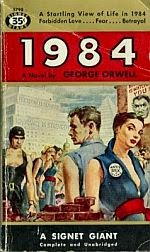
As part of the major design trends of those days, paperback books with graphic, sometimes lurid, sultry, or macabre covers were waiting for the GIs when they returned home. These wonders of mid-century graphic design perfectly describe their time, the cultural evolution that created them, shaped by technological advances, improved educational systems, and employment that provided not only discretionary income but also provided leisure time.
It was technology that allowed the chap books of the mid 17th century to become dime novels that began the 20th century. Then with the print industry transitioning to better production methods (photo-lithography), better paper at a better price (enamel stocks print sharper color) and efficient new binding systems (soft cover books), a revolution in book publishing,
marketing and design was under way during the time between the wars.
In 1935, Allen Lane left as head of the London publisher Bodley Head to single-handedly establish Penguin Books, publishing literature in an affordable soft cover binding that sold for roughly what a pack of cigarettes cost. His gamble was so successful that for decades Penguin was a synonym of paperback.
Aware of the success of Lane's venture, Simon & Schuster created the Pocket Books imprint in 1939 headed by Robert deGraff, who immediately issued The Grapes of Wrath as a 25¢ soft cover, versus the $2.75 it took to purchase the hardcover.
Penguin then brought in Ian Ballantine, a grad student from the London School of Economics, to establish the Penguin brand in the United States, but the books they offered were reprints of
their English editions with the covers changed to reflect domestic pricing from pounds to dollars.
DeGraff had plunged right in with graphic covers on Pocket Books from day one, forcing Ballantine to surreptitiously begin to redesign the Penguin classics with new splashy covers to compete.
When Lane later discovered the altered covers bearing his company's name, Ballantine left to establish Bantam Books in 1945 and the three way race to American paperback dominance was on.
This new format probably could not have prospered using cover designs found on hard cover dust jackets. Publishers sold the profitable hardcovers to their traditional book audience, more attuned to works of accomplished writers and who stored their books in cases that lined the walls of their parlor, while the paperback was purchased by readers that just wanted a good read.
Who were these new readers?
Some attribute the birth of this audience as the product of an improved educational system. Literacy climbed rapidly in the first half of the 20th century.
But Uncle Sam also had a role in the explosion of this seemingly new market. Beginning in 1943, the Army and Navy began giving away what would ultimately amount to 123,000,000 books to their forces stationed around the globe. While established literary titles were in the mix, the soldiers preferred the mysteries, westerns and comedies.
Even better, pre-war, most books were sold only in bookstores, but two out of
every three counties in America had no bookstore at all. Paperbacks, on the other hand, sold in racks at the local drugstore, grocery store, rail and bus terminals, even gas stations and restaurants. The country was suddenly awash in books.
Competing for sales meant designing covers that had instant appeal, that caught the eye while the display rack was slowly turning. This is the genesis not only of a golden age of graphic artists and designers, but the basis for many a collection of these wonderful books with covers that ran the gamut of outrageous to grotesque.
Ultimately, paperback covers acquired manners. Covers were tamed and having a collection of paperbacks no longer painted one as a literary mutant obsessed with all things seamy or violent. Only the Harlequin romance novels continued to highlight low bodices and passionate embraces.

It's a different time now. The graphic designers I've worked with earnestly study the text for a sense of the story that they can translate into something appropriate.
Where once the front cover of the book on the rack helped to sell the book, Borders and Barnes & Noble (and their regional clones) displayed 90% of their stocked titles in book cases with only the spine exposed. And yes, designers vied to design books with eye-catching spines.
I'm not sure I even see a need to design a cover for an ebook. While there are any number of web sites willing to design one for a price, an ebook cover is to a paper and ink book cover as a CD jewel case cover insert is to a vinyl LP album cover: similar but without a “Wow!”.
More efficient perhaps, but it makes the collecting of old paperbacks with brash, exciting covers all the more enjoyable. They are unique to my time, when I came of age hiding paperbacks from my parents, no matter how innocent the content.
They are a symbol, like flames painted on a deuce coupe, Elvis sinfully gyrating on the Ed Sullivan show, brush cuts grown long and shaggy, miniskirts that announced you were not a bobbysoxer, and the grief and anger that exploded when America's youngest President was assassinated. They not only baptized us, but marked us as a generation that acknowledged no boundaries.
And we're still here.

Additional sites show-casing these incredible covers:


Very Sad but Not Surprising
Islamic militants in Iraq looted and destroyed over 2,000 books from the Central Library of Mosul, leaving only Muslim texts on the shelves. Two years ago, the library at Timbuktu was torched by Muslim insurgents but locals had already smuggled the rarest and oldest texts to safety. You know you're backing the wrong side when ignorance becomes a goal.
TPP and Copyrights
As details of the controversial and extremely polarizing Trans Pacific Partnership (TPP) begin to surface, universal imposition of the ridiculous American copyright enforcement period has many nations threatening to walk away from the “secret” negotiations. Thanks, Sonny Bono.
Designing with Fonts & Text
General rules for using type and fonts aren't set in stone so don't be afraid to experiment. However, I still find the current use of sans serif fonts in magazines a pain, especially when the type is reversed to white.
Rare Books Left to Princeton
A family's rare book collection begun 150 years ago has been bequeathed to Princeton University. The collection included six editions of the Gutenberg Bible and was estimated to be worth $300 million.
Speaking of Covers
In the throes of a neurotic, digital ecstasy, a Dutch designer has created a book cover that “reads” the facial expression of the person holding it and then decides whether or not to allow itself to be opened and read. The Dutch seem to have sooo much time on their hands.
Jet.com Opens This Month
The biggest threat to Amazon.com that you never heard of, jet.com, has raised $600 million from investors and intends to open in March. It will compete by using local stores to fill its orders, eliminating warehousing and freight costs. Founder Marc Lore is a former Amazon exec.
Libraries at Airports
I'm surprised that no one ever thought of this before: put lending libraries in big airports. They offer everything from paper and ink books to ebooks, musical CDs, even DVDs and they have been generally very well received.
They Smell so Good
Apparently there are readers who resist ebooks simply because they don't smell like anything but plastic. One of the joys I had in the shop was watching publishers open that first carton of books, close their eyes and inhale deeply. Leave it to the folks at Abe Books to tell us why books smell so darn good.
Le Morte d'Archie
This June, issue #666 of Archie Comics will be the last after over seventy years of publication. Archie may return in a new comic book serial, but its content and design are just in the planning stages. Life with Archie folded last year with issue #36.
Happy Birthday, New Yorker
The New Yorker magazine is celebrating 90 years of publishing. Nine original covers by New Yorker artists will be used on the special edition which became available late in February, each
featuring a different take on their monocled mascot. Even Amazon is joining the celebration with a new series entitled The New Yorker Presents.
Family Christian Stores Bankrupt
The largest Christian chain bookstore with 266 stores in 36 states has declared bankruptcy to reorganize. Family Christian said debt that had accumulated during the recession needed to be renegotiated.
Final thoughts
I am eternally grateful for my knack of finding in great books, some of them very funny books, reason enough to feel honored to be alive, no matter what else might be going on.” Kurt Vonnegut
************************************************
Archived Newsletters are at http://grubstreetnews.blogspot.com/

Blog Archive